
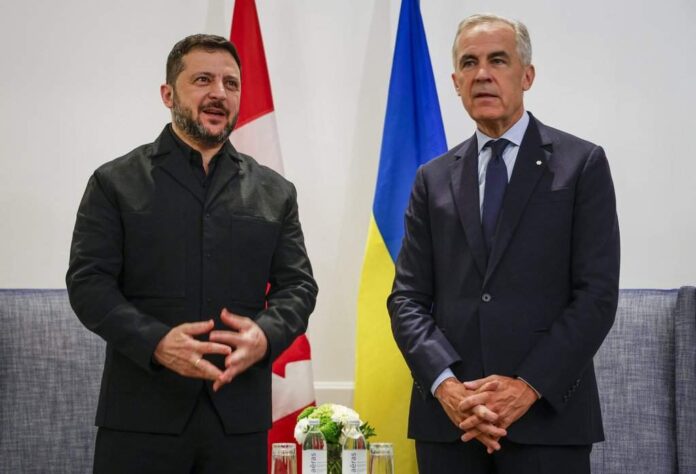
Canada, Ukraine and Norway will co-host a two-day international conference in Toronto on September 28 and 29, bringing together foreign ministers and senior government officials to press for the return of Ukrainian children forcibly transferred by Russia, unlawfully detained civilians and prisoners of war.
Foreign Affairs Minister Anita Anand announced the gathering on Saturday. Formally titled Pathways to Peace: Second International Conference on Returning Ukrainian Children, Detained Civilians, and Prisoners of War, the event will also include representatives from international organizations working on humanitarian and reintegration issues.
The Scale of the Crisis
The numbers underlying the conference are stark. Ukrainian authorities have documented 20,651 cases of possible unlawful deportation or forcible transfer of Ukrainian children by Russia. Of those, only 2,573 children have so far been returned from deportation, forcible transfer or temporarily occupied territories.
The situation for detained civilians is similarly troubling. As of June, Ukraine’s parliamentary commissioner for human rights had confirmed 1,878 civilians unlawfully held by Russia — though Global Affairs Canada cautioned that the true figure could be significantly higher. Some civil society organizations estimate that as many as 20,000 civilians may be detained.
Ukraine does not publicly disclose the exact number of its prisoners of war held by Russia. As of August, however, 9,529 Ukrainian military personnel and civilians had been returned from Russian captivity, according to Global Affairs Canada.
What the Conference Will Address
“Canada, Ukraine and Norway are convening the conference to strengthen international support for efforts to bring people home, protect those who remain under Russian control and ensure that those who return can access rehabilitation and reintegration services,” Global Affairs Canada said in a statement.
Participants in Toronto are expected to focus on several concrete areas:
A Conference Amid Escalating Violence
The announcement comes as Russia intensifies its air campaign against Ukrainian cities and civilian infrastructure. On Saturday alone, Russian strikes killed eight civilians and wounded dozens more across the country, according to local officials.
Two people were killed when Russian drones struck a residential area in Zaporizhzhia. Another person died in Kryvyi Rih. In Odesa and the surrounding region, 35 people were wounded in what regional officials described as a “massive attack.” Three more people died when drones struck vehicles in Kramatorsk, and two others were killed in a Russian attack on a grocery store in the Zhytomyr region.
The strikes followed a warning from Russian President Vladimir Putin on Friday, delivered during a BRICS summit in India, that the deployment of European troops to Ukraine would constitute direct conflict with Russia. “Now they’re talking about how they’re considering sending troops into Ukraine. That means a war with Russia,” Putin said.
Some European leaders have pledged support for a potential peacekeeping force in Ukraine as part of a future peace settlement — a proposal Moscow has consistently rejected. Ukrainian President Volodymyr Zelenskyy, for his part, said in an interview published Saturday that he would be willing to meet Putin if both leaders were invited to the G20 summit in Miami in December.
Canada’s Broader Commitment
Canada has committed more than $26 billion in multifaceted support to Ukraine since Russia launched its full-scale invasion, including more than $750 million directed specifically toward recovery and reconstruction, according to the federal government.
The Toronto conference represents the second international gathering of its kind focused on the return of Ukrainian nationals from Russian control, building on earlier diplomatic efforts to internationalize accountability for what Ukrainian and Western governments characterize as systematic violations of international humanitarian law.
— With files from The Canadian Press

