
The Canada-U.S. trade dispute has landed squarely in the middle of Quebec’s provincial election, forcing party leaders to confront a fast-moving economic crisis that no campaign script had fully anticipated.
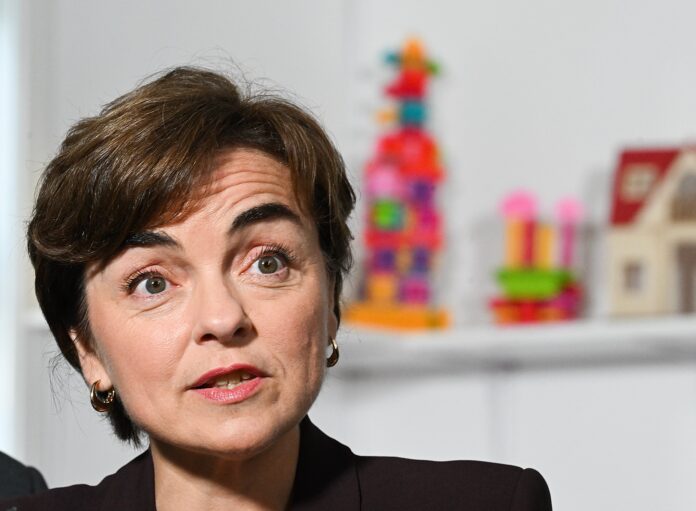
Premier Christine Fréchette issued a pointed warning Monday that Canadian counter-tariffs set to take effect at midnight could provoke yet another retaliatory response from the Trump administration, setting off a new cycle of escalation. “Are the Americans going to respond to these counter-tariffs? I have to say I wouldn’t be surprised,” she told reporters in Mirabel. “That could trigger another cycle, so we’ll have to see.” The Coalition avenir Québec leader briefly stepped away from the campaign trail that evening to chair a virtual cabinet meeting, framing the decision not as a political manoeuvre but as a governing responsibility. “I won’t apologize for governing when it’s to protect our businesses, our economy and our workers,” she said.
Quebec had previously raised concerns that some of Ottawa’s retaliatory measures risked hurting the province’s own industries before benefiting them, and those concerns appear to have carried weight in federal deliberations. John Fragos, press secretary for federal Finance Minister François-Philippe Champagne, confirmed that Quebec was among the governments consulted when Ottawa revised its counter-tariff product list two weeks ago. “The changes were determined in part based on discussions with and recommendations by the Quebec government and key economic and sectoral players in Quebec,” Fragos said, adding that Ottawa also extended its tariff-remission program to cover newly targeted products. The federal government secured what it described as dollar-for-dollar counter-measures, with new tariffs applied to certain U.S. goods — including copper wire and dairy products — that Quebec producers are positioned to supply to the rest of Canada.
What do the opposition parties make of all this?
The responses from opposition leaders reveal genuinely different visions of how Quebec should navigate the crisis, not simply partisan point-scoring. Liberal Leader Charles Milliard attended Fréchette’s post-cabinet briefing, though he was candid about his reluctance. “I’ll be honest with you, I don’t want to go at all, but I’m going to go in the public interest,” he told reporters in Laval. Milliard had earlier described the cabinet meeting as a “play” and accused Fréchette of failing to adequately prepare Quebec businesses for the trade war — a charge that cuts to a deeper disagreement about economic readiness. In a video released Monday, he framed the U.S. tariffs as an “economic aggression” and argued the crisis should become a catalyst for diversifying Quebec’s export markets, cutting red tape, and reducing regulatory burdens. “A crisis like the one we’re experiencing isn’t just an ordeal to overcome; it has to be a starting point toward a better future,” he said.
Quebec Conservative Leader Éric Duhaime declined the premier’s invitation outright, accusing Fréchette of using the trade dispute as a campaign distraction rather than a genuine governing moment. Parti Québécois Leader Paul St-Pierre Plamondon agreed to attend but asked that opposition parties receive relevant documents and details in advance of the meeting — a reasonable procedural request that signals his intention to engage substantively rather than ceremonially. Québec solidaire co-spokesperson Ruba Ghazal also accepted the invitation. The range of responses — from Duhaime’s outright refusal to Ghazal’s acceptance — reflects how differently Quebec’s political parties are choosing to position themselves as the economic stakes grow harder to ignore.

