
A Weekend of High-Stakes Bargaining
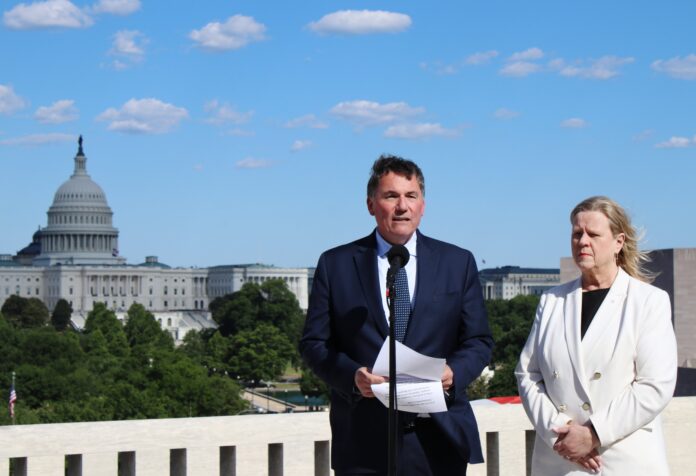
Canada and the United States spent the weekend in intensive trade negotiations, with Ottawa scrambling to prevent a new round of punishing tariffs scheduled to take effect on Wednesday. The talks came to a head Sunday afternoon when Canada-U.S. Trade Minister Dominic LeBlanc held a virtual meeting with U.S. Trade Representative Jamieson Greer, joined by Canada’s lead negotiator, Janice Charette. LeBlanc’s office confirmed the hour-long session was “constructive” and that discussions would continue, but offered no indication that a deal was imminent. LeBlanc remained in Washington through the weekend and planned to stay into Monday as the clock ticked down. Prime Minister Mark Carney, who had initially been reported to be vacationing in Italy until Monday, returned to Canada on Sunday and was expected in St. John’s on Monday.
The legal architecture of this dispute matters. Canada is trying to negotiate an agreement that would prevent new tariffs under Section 338 of the Smoot-Hawley Tariff Act of 1930 — a Depression-era statute that the Trump administration has threatened to invoke on Wednesday. Ottawa is simultaneously pushing to reduce existing levies on steel, aluminum, automobiles, and lumber imposed last year under Section 232 of the Trade Expansion Act of 1962. These are two distinct legal mechanisms with different political histories, and disentangling them has proven enormously complex.
The Auto Sector: Margins, Content, and an Existential Threat
Five sources briefed on the negotiations told The Globe and Mail that Section 232 tariffs on autos and lumber remain the central sticking points. The United States has proposed reducing auto tariffs to 15 per cent — a figure Canada considers unworkable. Two sources said Canada has argued that such a rate would render the industry non-viable, given that profit margins in auto manufacturing sit in the single digits. The math is straightforward and brutal: a 15 per cent tariff applied to vehicles with razor-thin margins does not leave room for the industry to absorb costs without cutting production or jobs.
Canada has countered with a proposal that would exempt the full value of all content originating within the United States-Mexico-Canada Agreement (USMCA) zone from the tariff, meaning the levy would apply only to components sourced from outside North America. The U.S. position, by contrast, would exempt only American-origin content. One source said this distinction — not the precise tariff percentage — is actually the larger unresolved issue. It reflects a fundamental disagreement about whether North American supply chains should be treated as integrated or whether the U.S. is seeking to gradually pull production southward.
Eric Miller, a trade adviser and president of the Rideau Potomac Strategy Group, said the American proposal is designed to embed structural incentives that would steadily reduce the use of Canadian content in auto manufacturing. He described it as creating an “existential fear” for Canadian car and auto parts manufacturers — one that would erode the industry north of the border and deal a significant blow to both the Canadian and Ontario economies over time.
Forestry: A Sector Left Without Cover
The outlook for Canada’s forestry sector is even bleaker at the negotiating table. Three sources said the U.S. has refused to offer any reduction of Section 232 tariffs on lumber. Instead, American negotiators have argued that Canada should wait for a separate U.S. Department of Commerce review expected to reduce a different set of softwood lumber tariffs. One source said Canada fears Washington would simply raise the Section 232 tariffs to compensate if the Commerce Department lowers the others — leaving the industry no better off. The best outcome Canada might realistically secure, one source noted, is an American commitment to discuss forestry tariffs further at a later date.
For British Columbia, the stakes are particularly severe. The province’s forestry industry already faced countervailing and anti-dumping duties before the Section 232 tariffs were layered on top, compounding the damage. Kim Haakstad, interim president of the B.C. Lumber Trade Council, said Sunday she is worried that if the 232 tariffs remain, more mills will close — and that closures ripple outward, shuttering secondary facilities that depend on primary manufacturing. The council’s position is that Canadian and American lumber producers serve different construction markets and do not genuinely compete, making the tariffs a cost imposed on American consumers rather than a protection of American producers. Miller, however, noted that the U.S. Lumber Coalition sees it differently and is lobbying “all out” to keep the 232 tariffs in place.
Provincial Premiers Draw Their Lines
The trade file is not Ottawa’s alone to manage. Both B.C. Premier David Eby and Ontario Premier Doug Ford have made clear they will only agree to return American alcohol to provincial store shelves — a concession Washington has sought — if there is meaningful tariff relief for their hardest-hit industries. Ford has said he is open to lifting Ontario’s ban on U.S. alcohol, but only as part of a genuinely fair deal. Eby has taken a similar position, anchoring any concession on alcohol to real movement on lumber and autos.
This dynamic illustrates the federal-provincial complexity woven into Canadian trade policy. Liquor sales fall under provincial jurisdiction; the premiers are not merely stakeholders offering opinions, but actors with genuine constitutional authority over key elements of the Canadian response. Ottawa cannot simply deliver concessions on alcohol without provincial buy-in, and the premiers have been explicit about their conditions.
If Wednesday Arrives Without a Deal
The consequences of failure are substantial. If the Trump administration proceeds with its threatened Section 338 tariffs, a 50 per cent duty would be applied to an estimated US$20 billion worth of Canadian exports — including electronics, dairy, alcohol, wood products, and other goods — stacked on top of tariffs already in place. Charette has warned U.S. negotiators that the imposition of these tariffs would represent a “cliff” in the negotiations: Ottawa would be compelled to retaliate. Carney has said all options remain on the table, with one explicit exception — he has ruled out using Canadian oil exports as a retaliatory lever.
Ottawa is actively preparing retaliation plans, according to two sources familiar with the discussions. The shape of that response has not been disclosed, but the signal being sent to Washington is deliberate: Canada will not absorb new tariffs passively.
No Good Options — Only Bad Choices
Former Quebec Premier Jean Charest, who sits on Carney’s advisory committee on Canada-U.S. economic relations, offered a candid assessment in a Sunday interview. “There’s only bad choices in this world,” he said. He acknowledged Carney’s argument that Canada still enjoys better market access to the United States than most countries, but noted the limits of that framing: “It’s a difficult argument to make to a person who’s lost their job.” Any deal that involves accepting even reduced tariffs will be a hard sell with Canadians who have little appetite for what they perceive as concessions, Charest said. And if no deal is reached, he warned, Canada will deliver a “strong response” — one the U.S. should expect and be prepared for.
The week ahead will test not only the durability of the Canada-U.S. trade relationship but also the capacity of Canadian institutions — federal and provincial — to act in concert under pressure. The outcome will be felt from auto assembly lines in Windsor to lumber mills in the B.C. Interior, and the window to avoid it is closing fast.

