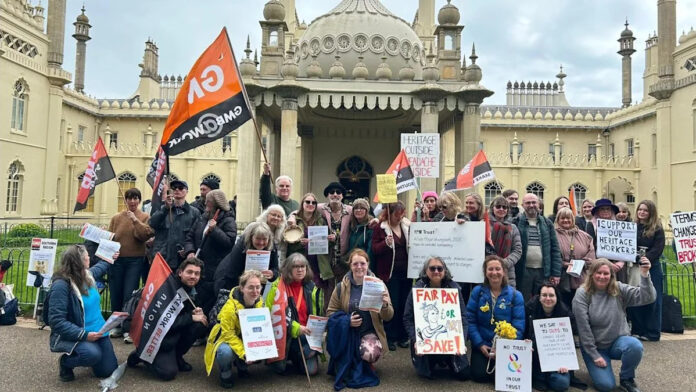
A labour dispute that had disrupted operations at the Brighton and Hove Museums Trust came to a close this month after workers and management reached a negotiated settlement, ending a standoff that had seen staff walk off the job in April over proposed changes to their employment contracts. The agreement, backed by both the Unison and GMB unions, preserves workers’ previous contractual terms and delivers a modest pay increase, bringing an end to a conflict that had threatened further disruption into the summer.
The original dispute centred on contract changes that union representatives argued left employees exposed to unilateral alterations to their working conditions. Staff walked out in April in protest, and further strike action had been scheduled for July before both sides reached an initial agreement at the board level, prompting unions to stand down the planned walkouts. The resolution now ratified by the workforce secures the maintenance of existing agreements alongside a 1% pay rise — described by union spokespeople as “limited” but meaningful in the context of preserving hard-won protections.
Jo Galloway, Unison’s south east regional secretary, framed the outcome as a genuine win for the workforce rather than a mere compromise. “The agreement works well for everyone,” she said. “It provides certainty to the workforce and it’s a positive way forward with the trust as a whole.” She was clear about where the priorities of museum staff had always lain: workers, she said, want to protect Brighton’s heritage, not spend their time in dispute — and the settlement allows them to return to the work they care about.
Oliver Cruickshank, regional organiser for GMB, echoed that sentiment, noting that members had shown real courage in taking collective action. “Our members were brave enough to take action to protect their jobs, which they care so deeply and are so passionate about,” he said — a reminder that the willingness to strike is rarely taken lightly, particularly among workers whose vocations are tied to public cultural institutions.
One of the more significant structural outcomes of the deal is the establishment of a formal collective bargaining agreement between the trust and both unions, giving Unison and GMB an ongoing mechanism to negotiate future pay and conditions. This is not a trivial development: collective bargaining rights represent a meaningful shift in the power balance between workers and management, providing a durable framework for resolving disputes before they escalate to industrial action. It transforms the relationship from one of ad hoc confrontation to one of structured, ongoing negotiation.
Brighton and Hove Museums chief executive Hedley Swain welcomed the resolution in terms that acknowledged both the workers’ concerns and the institution’s financial constraints. He described the deal as one that “protects key terms and conditions while ensuring the financial stability of the trust,” and said the organization looks forward to working constructively with the unions going forward. “With this resolution in place we can all focus on our shared priority — protecting and sharing Brighton and Hove’s extraordinary culture and heritage for our community and visitors,” he added, striking a conciliatory note that suggests the trust is prepared to treat union recognition as a feature rather than a burden.
The settlement at Brighton and Hove Museums reflects a broader pattern in publicly-oriented cultural institutions, where workers — often deeply committed to their missions — find themselves caught between genuine passion for their roles and the material realities of employment security. When contract changes threaten the stability that allows people to do that work, collective action becomes not a rejection of the institution’s values but an assertion of them. That both sides appear to have recognized this is, perhaps, the most encouraging aspect of how this particular dispute ended.

