Iran is not begging for a deal. It is setting the price of one.
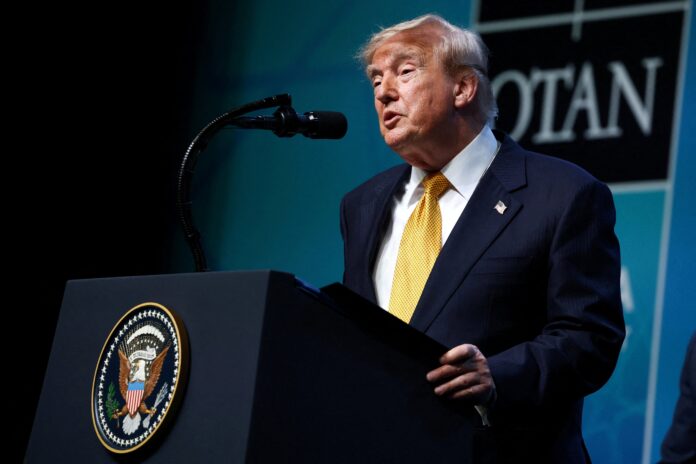
That distinction matters enormously, and it cuts through the noise surrounding the ongoing conflict in the Persian Gulf. U.S. President Donald Trump has made no secret of his desire to see the Strait of Hormuz reopened and the war wound down. Tehran has read that desire clearly, and it is exploiting it with considerable strategic patience — the same patience that smaller, poorer adversaries have used before to outlast a superpower whose domestic politics impose a ticking clock.
The historical parallel is uncomfortable but instructive. During its decade-long involvement in Vietnam, the United States military lost nearly 10,000 aircraft — a figure that captures both the staggering industrial capacity of mid-twentieth-century America and the ultimate futility of applying that capacity against an adversary operating on a completely different timescale. Washington measured the war in months and electoral cycles. Hanoi measured it in decades. North Vietnam absorbed far greater casualties than the United States, but its leadership could accept those losses in ways that a democratic government, answerable to voters, simply could not. The side willing to endure more punishment for longer won. America negotiated a face-saving exit, its adversary conceded essentially nothing, and the governments Washington had backed in South Vietnam, Laos and Cambodia were eventually crushed.
For Iran, that history is not a cautionary tale. It is a model.
Last month, the Trump administration signed a memorandum of understanding with Tehran that, in exchange for a promise to reopen a waterway that had been fully open before the conflict began, lifted sanctions on Iranian oil for sixty days, dangled the prospect of significantly larger rewards, and effectively made Iran’s permission for Gulf shipping conditional on the United States restraining Israel in Lebanon — to the direct benefit of Iranian-backed Hezbollah. The agreement also included commitments to further talks on Iran’s nuclear program, a provision that functions less as a substantive diplomatic objective than as a fig leaf covering a significant American retreat.
The ink was barely dry before the arrangement began to unravel. Iran resumed targeting vessels in and around the Strait of Hormuz, and the United States launched new air strikes against Iranian positions. Bahrain, Kuwait and Qatar found themselves caught in crossfire that once again threatened the interim arrangement. The logic behind Tehran’s behaviour is not difficult to follow. Iran negotiates the way Trump himself is known to negotiate: extract a concession, then push for another. Having wrested real gains from the memorandum, Tehran now believes — not unreasonably, given recent history — that it can force further American retreats by squeezing the strait and pushing oil prices higher.
Trump’s Truth Social posts have presented a different picture, one in which American strikes have devastated Iran’s military and Tehran is desperate for relief. Some left-leaning American commentary has framed the conflict as entirely Trump’s creation, implying that the solution is simply to stop. Neither framing captures what is actually happening. Trump did make a serious error in initiating this war, and that error carries real consequences. But Iran has been dictating the pace and terms of the conflict for some time now, and it is doing so by targeting the two pressure points most likely to move American policy: oil prices and domestic political sentiment.
Anti-war sentiment runs strong across both Democratic and Republican voter bases in the United States. So does the desire for cheap gasoline. Trump is acutely aware of both. That awareness is precisely why he is in a hurry to close this file, while Tehran, facing no comparable electoral pressure, is not. The contrast in urgency is itself a strategic asset for Iran.
The stakes of Iran’s endgame are significant. What Tehran is ultimately pursuing is the ability to levy a toll on the Strait of Hormuz — to compel ships and the Gulf states, all of them American allies, to pay for the “safety” of their energy shipments. Safety, that is, from Iranian attack. It is a straightforward protection racket, and if it succeeds, it would fundamentally reshape the balance of power in the Middle East. American allies in the region would face a transformed security environment, and U.S. credibility as a guarantor of Gulf stability would be severely damaged.
And yet, caving to those demands would deliver something Trump badly wants in the short term. After the memorandum was signed, oil prices fell. That is the transaction Iran is offering: more concessions in exchange for lower prices at the pump, the political metric Trump has made central to his economic messaging. Thirteen American service personnel have died in this conflict, and 42 U.S. aircraft have been reported destroyed or damaged — figures that, by the standards of Vietnam, are small, but that most American voters already consider too high a price for too uncertain a return. Tehran is counting on exactly that calculus.
The war in the Persian Gulf is not over. The Strait of Hormuz remains largely closed. And Iran, patient and purposeful, is waiting to see how much more Washington is willing to trade away to end a conflict it no longer has the political appetite to sustain.

