
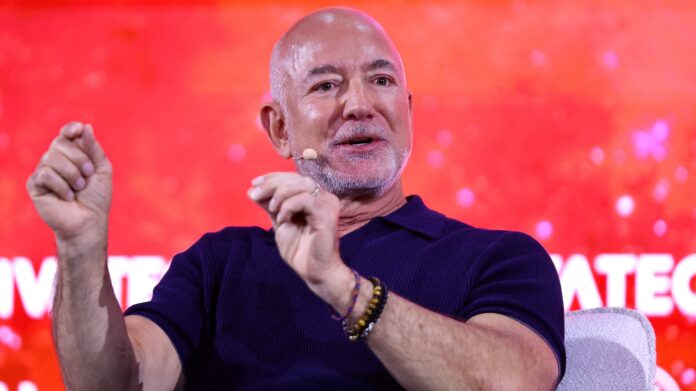
Jeff Bezos’s space venture, Blue Origin, is reportedly pursuing $10 billion in fresh funding, a move that signals the company’s ambition to dramatically accelerate its growth and close the gap with dominant rival SpaceX.
The fundraising effort, if successful, would represent one of the largest capital injections in the commercial space sector to date. Blue Origin, founded by Bezos — who also built Amazon into a global retail and technology giant — has long been viewed as a well-funded but slower-moving competitor to Elon Musk’s SpaceX, which has pulled ahead in launch frequency, contracts, and public visibility.
The scale of the reported raise raises immediate questions about what Blue Origin intends to do with the capital. The company has been developing its New Glenn heavy-lift rocket, expanding its lunar program under NASA contracts, and building out its commercial launch capabilities. A $10 billion infusion would give it the runway to pursue several of those fronts simultaneously.
SpaceX’s Lead — and Blue Origin’s Opening
SpaceX currently dominates the commercial launch market, buoyed by its reusable Falcon 9 rocket, the in-development Starship system, and a deep roster of government and private contracts. Its Starlink satellite internet constellation has also become a significant revenue stream in its own right. By almost any operational metric, SpaceX is the industry’s benchmark.
Yet the commercial space sector is not a winner-take-all market. Government agencies, satellite operators, and defence contractors have consistently expressed interest in maintaining more than one viable launch provider — both to manage costs and to reduce dependence on a single company. That structural demand creates genuine space for a well-capitalized Blue Origin to compete.
New Glenn completed its first successful orbital mission earlier this year, a milestone that gave the company credibility it had previously lacked. Combined with Blue Origin’s existing NASA partnerships — including a contract for a lunar lander under the Artemis program — the timing of a major funding round is not coincidental.
What the Money Would Need to Accomplish
Catching up to SpaceX is not simply a matter of writing large cheques. The gap in launch cadence, infrastructure, and operational experience is substantial.
None of this is beyond reach for a company backed by one of the world’s wealthiest individuals. But the history of the space industry is littered with well-funded ventures that underestimated the complexity of execution.
Whether Blue Origin’s funding push translates into a genuine competitive challenge for SpaceX — or remains a story of potential rather than performance — will depend on how effectively it deploys capital over the next several years. The commercial space race, in other words, is far from settled.

