
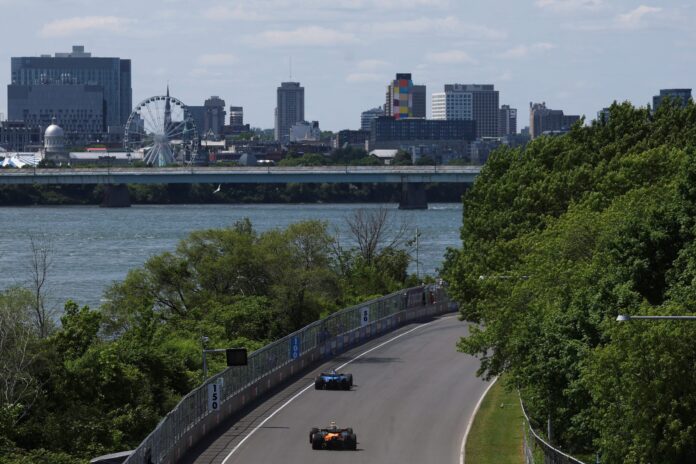
Montreal strippers plan F1 weekend strike to demand better working conditions and decriminalization of sex work
Montreal sex worker and organizer Adore Goldman is leading a strike on the second day of Formula 1 weekend — one of the city’s busiest periods for adult entertainment — to demand stronger labour protections for strippers and erotic massage parlour workers, and to push for the decriminalization of sex work.
Strike timed to maximize visibility
Members of the Sex Work Autonomous Committee (SWAC) have organized the action for Saturday, when clubs are typically packed with F1 visitors. Participating strippers have marked themselves as unavailable to their managers.
After a march through downtown Montreal, demonstrators plan to split up and distribute flyers outside various venues, sharing their demands with patrons, passersby, and other strippers heading into work.
Independent contractor status at the heart of the dispute
The vast majority of Canadian strippers are classified as independent contractors — an industry-wide norm that Goldman says shields club owners from accountability over unsafe working conditions.
“Being recognized as an employee, your employers have to guarantee your safety and your mental health at work,” she told CBC. “Like sexual violence that happened in the clubs in the past, if we were employees, the person could get compensated if it was a work accident — because it is a work accident.”
CBC granted Goldman’s request to use her professional name rather than her legal name due to safety concerns related to her clients.
Bar fees cutting into already thin earnings
A central grievance is the “bar fee” clubs charge dancers simply to work a shift. These fees typically range from $15 to $100 and are sometimes raised during F1 weekend — even though the event does not necessarily translate into higher earnings per dancer.
“There might be more clients, but there’s no more clients per stripper. So it’s not that profitable for us, but it is for the employers,” Goldman said, pointing to club owners’ practice of over-scheduling on busy days.
A Montreal student and filmmaker who strips says she pays around $60 in bar fees on regular shifts, not including customary tips to bouncers and DJs. “Usually $100 total to work on weekends at my club, and then also transportation there and back,” she said. “I have left in the negative and it’s always in the winter.” CBC is withholding her identity because she fears losing her job over her union activities.
Some in the industry argue bar fees help offset costs such as music licensing, locker room upkeep, and electricity.
A legal grey zone with real consequences
Canada’s sex industry operates under a contradictory legal framework: selling sexual services is legal, but purchasing them can expose clients to criminal prosecution. This creates an uneven landscape where workers bear the greatest risk.
Not all strippers sell what the law defines as “sexual services,” and not all identify as sex workers. But Frances Shaver, professor emeritus of sociology at Concordia University, says the stigma attached to sex work affects all workers in the industry regardless of what they actually do.
“That’s why the process of legitimizing sex work becomes really important,” Shaver said.
Violence and lack of training on the job
Goldman says she experiences unwanted physical contact on virtually every shift. “I have clients trying to touch me in inappropriate places, even take their penis out,” she said. “Sometimes you have to get into an argument. I had a customer who bit my boob. I’d say every shift there’s something that happens that I don’t consent to.”
The filmmaker says she never received any training on how to handle unruly clients and has taken it upon herself to train new strippers entering the scene.
Unionization as a path to decriminalization
Goldman and SWAC’s longer-term goal is to form a union grouping all types of sex workers — strippers, erotic massage workers, and escorts — to build collective bargaining power and create legal pressure on the government to decriminalize sex work.
Shifting workers from independent contractor to employee status would be a key first step, making unionization legally easier to pursue.
Geographic monopoly limits workers’ options
Not all strippers have the ability to strike. Unlike most industries, leaving one club for another in Montreal is not straightforward. Erotic establishments are banned in most of the city’s boroughs, and those that permit them restrict them to specific zones that can be difficult to reach by transit.
Opening a new strip club requires special alcohol permits and public consultations, creating significant barriers to entry. “This makes it so there’s even more competition between each other, and the clubs have like a monopoly,” Goldman said.
Federal government not moving on decriminalization
In a statement to CBC, the federal Department of Justice said it “acknowledges that these issues prompt strongly held views, but full decriminalization is not something that is being considered at this time.”
CBC made multiple attempts to reach various Montreal strip clubs for comment and received no response.

