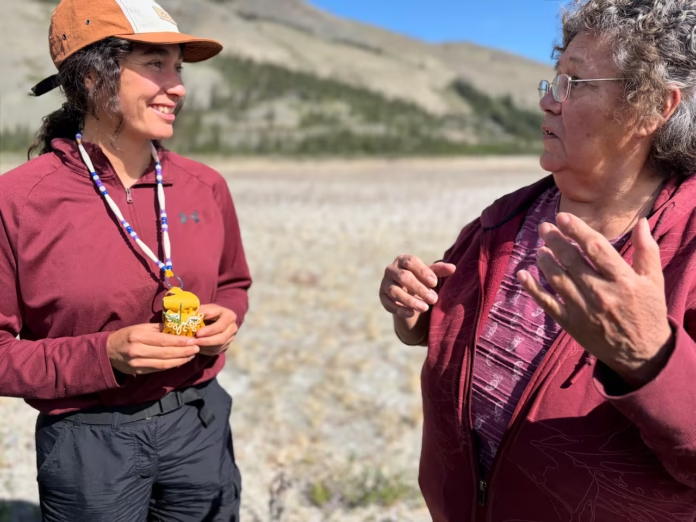
Sharon Kabanak, a citizen of the Kluane First Nation, is working to ensure that Indigenous traditional knowledge does not fade with her generation — passing it on through hands-on workshops near Haines Junction, Yukon, that welcome children, families, and visitors from a wide range of cultural backgrounds.
Knowledge Rooted in Community and Mentorship
Kabanak learned traditional practices over years of guidance from her mother, mentors, and elders within her community. That foundation of intergenerational transmission now shapes her own approach to teaching. Rather than treating traditional knowledge as a fixed cultural artifact, she treats it as a living practice — something that must be actively shared and exercised to survive. Her workshops reflect that philosophy, offering participants direct, hands-on engagement with techniques and materials drawn from Kluane heritage.
Workshops at a Shared Cultural Space
A recent workshop took place at the Thechàl Dhâl’ Visitor Centre, a collaborative space jointly operated by Kluane First Nation and Parks Canada, located near Silver City, north of Haines Junction. At that session, Kabanak guided participants through the making of necklaces and medicine bags, using beads and plastic bone-shaped pieces inspired by traditional styles. The workshop drew participants across generations and cultures, reflecting Kabanak’s intent to open this knowledge to anyone willing to engage with it respectfully. Among those attending was Marilou Roy, a master’s student, into whose handmade medicine bag Kabanak placed yarrow — the medicinal plant known scientifically as Achillea — demonstrating the practical, living dimension of the tradition.
Transmission as an Act of Sovereignty
The work Kabanak does sits within a broader context of Indigenous cultural continuity that carries constitutional and political weight in Canada. For First Nations communities across the country, the transmission of traditional knowledge — whether through language, ceremony, or craft — represents an assertion of ongoing sovereignty and self-determination. In the Yukon, where modern land claims agreements have given First Nations governments significant jurisdictional authority, cultural programming of this kind complements formal governance by reinforcing the social and spiritual fabric of the community. Kabanak’s workshops, modest in setting but significant in purpose, embody that connection between cultural practice and community resilience.
By opening her sessions to people from outside the Kluane Nation, Kabanak also builds bridges across cultural lines — inviting understanding without surrendering ownership of the knowledge she carries. Her stated goal is straightforward: to make sure what she learned from her elders continues to live on, long after her.

